Meet Pino Bosi
Pino (Giuseppe) Bosi (1935 - 2017) was a prominent author, broadcaster, journalist, and publisher whose multifaceted career spanned several decades. Born in Tolmino, Gorizia, Italy—now part of Slovenia—Bosi's life was marked by a deep commitment to journalism and community engagement.
After emigrating to Australia in 1951, he became an influential figure in the Italian language press, contributing significantly to a number of publications, including La Fiamma and La Croce del Sud. His editorial prowess was evident during his tenure as editor for both Il Globo and Settegiorni, where he shaped discussions within the Italian-Australian community.
In the late 1960s, Bosi expanded his reach by writing for major Australian newspapers, such as The Australian and The Daily Mirror, amplifying the voice of migrants and multicultural perspectives in mainstream media. In 1970, he founded Kurunda Publications, a venture that allowed him to publish his own works, including the notable books Australia cane and Blood, Sweat and Guts in 1971 and 1973.
His writings often reflected a blend of personal experience and cultural commentary, underscoring the immigrant experience and the resilience of his community. Bosi's contributions did not go unrecognized; he was honoured as Commendatore dell'Ordine della Repubblica Italiana by the Italian Government, a testament to his impact on both Italian and Australian societies. In 1988, for his dedication to community service and journalism earned he was made a Member of the Order of Australia (AM).
Bosi emerged as a pivotal figure in the mid-1970s, championing ethnic radio in Australia. He was instrumental in establishing Radio Italo-Australiana (RIA), a cooperative organization designed as a non-profit entity to provide airtime for diverse ethnic groups. His commitment to promoting multicultural voices was evident when, in 1975, he assumed the role of foundation vice-chairman of the Ethnic Communities' Council of New South Wales (N.S.W.). Bosi's influence expanded further through his involvement in Radio 2EA, where he served as the sole coordinator for the Italian program from 1975 to 1981. His dedication to fostering collaboration among broadcasters led him to become the foundation chairman of the Association of Ethnic Broadcasters and Coordinators (N.S.W.) in 1978, a key role that facilitated communication and partnerships with the Special Broadcasting Service (SBS).
In 1978, appointed by the Australian federal government, the chairman of SEBAC (State Ethnic Broadcasting Advisory Committee) he submitted a report in 1979 that significantly influenced the establishment of the Special Broadcasting Service (SBS).
Pino Bosi passed away in Melbourne on October 9, 2017, leaving behind a legacy of advocacy for multiculturalism and a richer understanding of the immigrant experience in Australia.
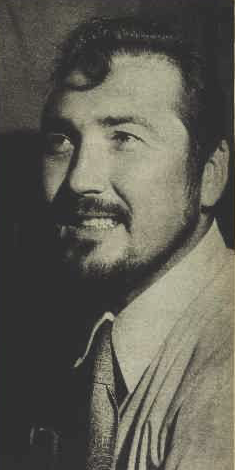
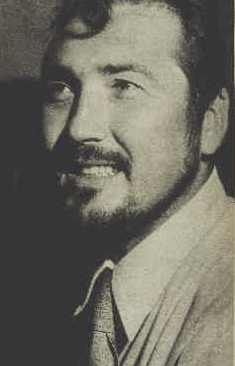
Moments Captured
Snapshots from Pino Bosi’s vibrant creative journey.


Praise
Words from those touched by Pino's work
Pino Bosi’s storytelling is a rare gift; his words linger long after you’ve read them.
Anna Lee


New York
Listening to Pino’s broadcasts feels like a conversation with an old friend who knows the world deeply.


Mark Wu
London